Mid-Year Review: First Funded Surgery Completed, Eight of Twelve Year One Activities Delivered
Six months into its first year, the foundation has completed its first funded patient case, signed its first hospital partnership agreement, and delivered eight of the twelve activities in its Year One work plan.
JKAiD Hope Foundation has published its mid-year progress review covering February to June 2026, the first half of the foundation's first year of operation. The review measures the foundation's delivery against a twelve-activity Year One work plan spanning governance, operations, hospital partnerships, programs, communications, monitoring and evaluation, and fundraising.
At the half-year mark, eight of the twelve activities are complete and the remaining four are in active progress. None has stalled.
The headline result is the foundation's first funded patient case. Bertha Eduley, an infant admitted to the Babies' Ward at Korle-Bu Teaching Hospital, was diagnosed with Occipital Encephalocele, a rare congenital condition in which brain tissue protrudes through an opening in the skull. Her treatment required a VP shunt placement and an encephalocele repair. The foundation approved her case, released the funds, and the surgery has been completed. Bertha is under recovery monitoring and her care is progressing.
The foundation is deliberate about the weight it places on this. One completed case is a genuine result and a proof of the pathway from case identification, through clinical partnership and funding, to a completed surgical intervention and recovery. It is not yet evidence that the model works at scale, and the foundation does not present it as such.
On cost, the case carried a lesson the foundation has recorded openly. The original indicative estimate for the treatment was GHS 5,000. Korle-Bu's issued proforma invoice came to GHS 18,894.98, roughly four times that figure. The board approved a revised, ring-fenced budget of GHS 20,889.73 against the invoice rather than the estimate, and it has been disbursed in full. Every future case is now budgeted against an issued hospital invoice rather than a generic estimate.
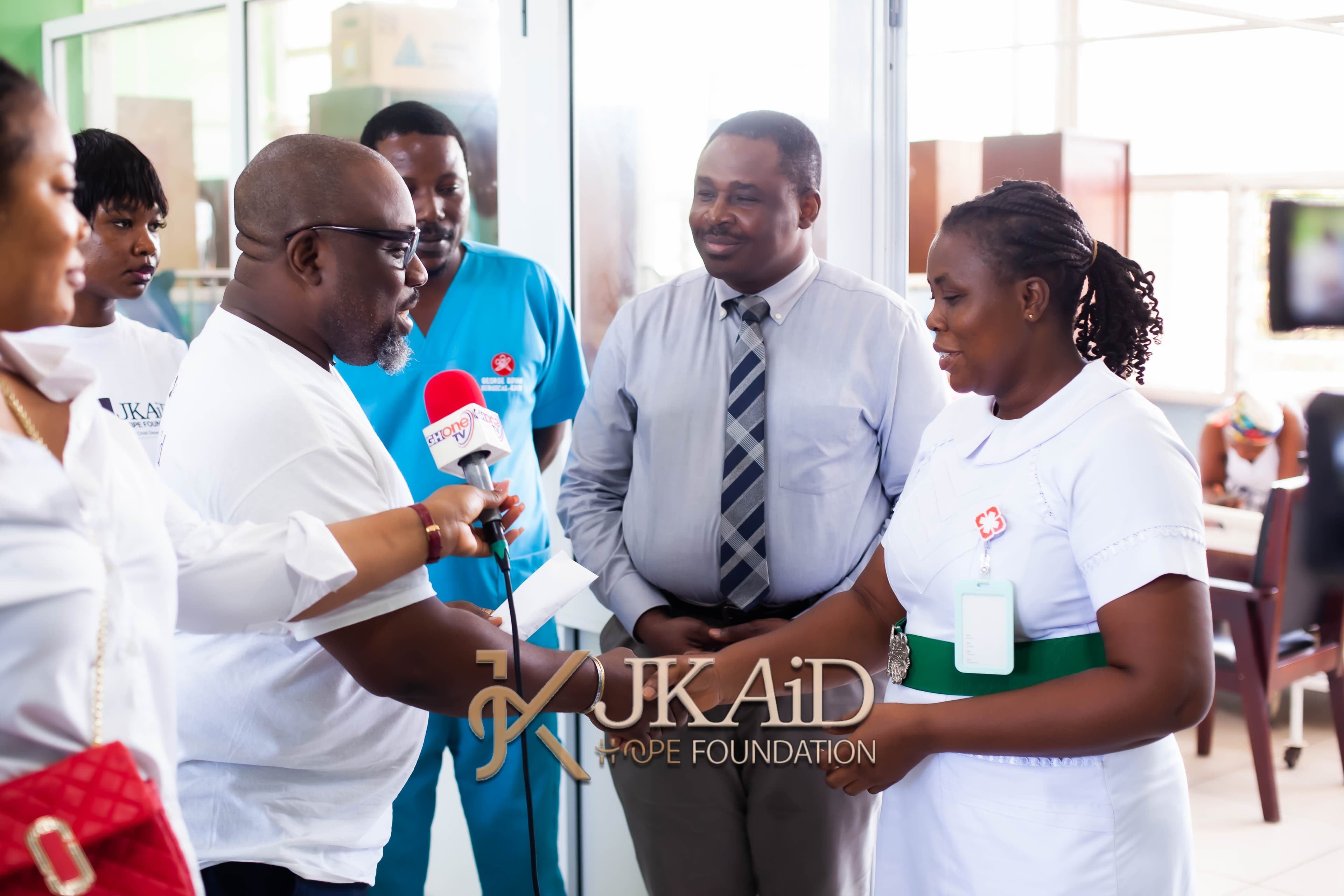
On partnerships, the foundation signed its partnership agreement with Korle-Bu Teaching Hospital, which serves as its primary clinical partner and is actively referring cases. Contact has been established with Ridge Hospital, and 37 Military Hospital sits in the partnership pipeline. Neither is a signed partner at this stage.
On governance, leadership held its kickoff meeting and established a weekly management meeting as the standing coordination structure. The team finalised and approved the case eligibility protocol that governs how patients are selected and verified, and developed an impact dashboard giving a single view of case progress. The foundation is registered as a not-for-profit with the Department of Social Welfare and is tax compliant.
On funding, the review is equally direct. The foundation has built a pipeline of named, high-value prospects and has the outreach materials ready to move each of them toward a commitment, but none of those conversations has yet converted into confirmed funds. Funding, the review states plainly, is the binding constraint on everything else. A live online donation channel is now open so that support raised through the foundation's advocacy can be received immediately.
The foundation's stated priority for the second half of the year is to convert that pipeline, treat the next set of pediatric cases, and put proper measurement in place across its communications so that reach and engagement can be reported as verified figures rather than impressions.
Support Our Work
Every contribution helps us reach more children in need. Your donation funds surgeries, screenings, and family support programs across Ghana.
Donate Now